
Harmonizing Shades: Crafting A Shade Garden worth gushing over
- colefraser1984
- Jun 11, 2025
- 10 min read
Creating a shade garden that flourishes in a palette of greens can be both fulfilling and challenging. An all-green garden evokes tranquility, emphasizing the beauty of nature without a distracting array of colors. By contrasting different shades, forms, and shapes, you can create a visually stunning focal point that attracts the eye and enlivens shaded areas. In this blog post, we will explore techniques and principles for designing an all-green shade garden that captivates attention and blends seamlessly with its surroundings.
Understanding Shade Gardens And Terminology
Shade gardens are exactly that: shaded. Often, we do not choose to create a shade garden; instead, we find ourselves compelled to work with the natural conditions present in our environment. This situation frequently arises due to the presence of a tree line, a building structure, or even the layout of our property, which can create areas that receive little to no direct sunlight. Despite the challenges associated with low light conditions, shade gardens provide unique opportunities to cultivate a diverse array of plants that not only thrive in these environments but also contribute stunning blooms and striking forms to the landscape. When planning your shade garden, it is essential to conduct a thorough assessment of the level of shade present in your space, as this factor significantly impacts plant selection. Different plants have varying tolerances to shade, and understanding the nuances of light exposure is crucial for creating a flourishing garden. For instance, the layering of plants in mixed borders can be carefully orchestrated to ensure that each species receives the appropriate amount of light. Additionally, when considering the placement of spring bulbs or ephemeral plants, it is vital to account for the seasonal changes in light that occur, especially beneath deciduous trees that lose their leaves in the fall and allow sunlight to penetrate during the winter months. Knowing your light exposure is essential to selecting the appropriate plants and crafting a beautiful shade garden that is both visually appealing and ecologically balanced. When you read the following on a plant insert, it’s important to recognize the meaning behind these terms. "Dappled shade" refers to conditions where bright sunshine filters through the leaves of trees, creating a mosaic of light and shadow on the ground. This type of light is ideal for many shade-loving plants, as it provides enough illumination without the harshness of direct sunlight. On the other hand, "deep shade" describes areas where there is a nearly constant shadow, often found beneath a very dense canopy of foliage. Plants that thrive in deep shade typically have adapted to low light conditions and may require specific care to flourish or let you know they hate their position in the garden by going chlorotic. Lastly, "part shade" indicates areas that receive approximately 3 to 6 hours of direct sunlight each day, which can support a wider variety of plants that prefer a bit more light without being exposed to the full intensity of the sun for extended periods. In conclusion, understanding the different levels of shade in your garden is a fundamental aspect of successful garden planning and execution. By carefully considering these factors, you can create a lush, vibrant shade garden that showcases the beauty and diversity of shade-tolerant plants, turning what might seem like a limitation into a unique and rewarding gardening opportunity.

Emphasizing Greens: The Power of Contrast
Contrast is a fundamental element in garden design, particularly when working within a monochromatic setting. This principle becomes especially significant when considering an all-green palette, which, at first glance, may appear simplistic or uniform. However, upon closer inspection, the myriad of green shades available can introduce a remarkable depth and complexity to your garden space.


The color green encompasses a vast spectrum of shades, ranging from the vibrant lime greens to the deep, rich forest greens. Each hue brings its own unique character and can evoke different feelings and atmospheres within the garden. For instance, lighter shades of green can create a sense of freshness and brightness, while darker greens can impart a feeling of tranquility and depth. This variation is crucial, as it allows for the creation of layers and textures that can transform a flat garden into a multi-dimensional landscape.
Incorporating diverse shades of green is not just about color; it also involves the thoughtful selection of plant forms and structures. By combining plants with varying heights, leaf shapes, and growth habits, you can create a dynamic visual experience. For example, tall, slender grasses can contrast beautifully with low-growing ground covers, while broad-leaved plants can add a sense of fullness and richness. This interplay between form and color is essential in framing the various blooms that will emerge throughout the seasons.


As the seasons change, different flowers will come into bloom, and the strategic use of contrasting greens can highlight these seasonal displays. By positioning lighter green plants around vibrant flowering species, you can draw the eye and enhance the visual impact of the blooms. This technique not only showcases the flowers but also reinforces the overall design by providing a cohesive backdrop that emphasizes the beauty of each seasonal change. Texture plays a vital role in creating contrast within a monochromatic garden. The rough, coarse texture of certain foliage can be juxtaposed against the smooth, delicate leaves of other plants, adding yet another layer of interest. This tactile variety contributes to the sensory experience of the garden, inviting visitors to engage more fully with the space.
Creating a monochromatic green garden may initially seem straightforward, the careful consideration of various shades of green, plant forms, and textures can yield a rich and engaging landscape. By embracing contrast, you can elevate your garden design, transforming it into a vibrant and multi-dimensional space that delights the senses and celebrates the beauty of nature throughout the seasons.
To create captivating contrasts, start by choosing plants with diverse foliage textures. For instance, the wide leaves of Hostas paired with the delicate fronds of ferns provide a dynamic element. Additionally, using larger leaves as a backdrop for smaller, finer-textured plants creates layers, enhancing the overall visual experience. Using variegated forms can add extraordinary contrasts, and draw your eyes to a defined spot.
Examples of Various Greens in Perennial Plants That Are Part Shade to Full Shade:
When it comes to cultivating a lush and vibrant garden in areas that receive part shade to full shade, selecting the right perennial plants is crucial. These plants not only thrive in lower light conditions but also exhibit a stunning array of green hues that can enhance the overall aesthetic of your garden. Below, we explore several examples of perennial plants that are well-suited for shaded environments, highlighting the diverse shades of green they offer.
Hostas are perhaps the quintessential shade-loving perennials, known for their striking foliage. They come in a variety of greens, from deep emerald to bright lime, and some even feature variegated leaves with white or yellow edges. The wide range of leaf shapes and sizes, combined with their ability to thrive in low-light conditions, makes hostas a popular choice for shaded gardens. Their lush foliage creates a beautiful backdrop for other flowering plants and can also help to fill in empty spaces in your garden.
Ferns are another excellent option for shade gardens, offering a unique texture and a spectrum of green shades. From the delicate fronds of the maidenhair fern, which display a soft, light green, to the robust, dark green leaves of the ostrich fern, these plants add an air of elegance and tranquility to any shaded area. Their feathery foliage can create a layered look, adding depth and interest to the landscape. Many ferns are also evergreen, providing year-round greenery even in the depths of winter.
Brunnera macrophylla, commonly known as Siberian bugloss, is a perennial that thrives in shady spots and showcases stunning heart-shaped leaves. The foliage typically presents a rich green color, and some varieties have striking silver markings that enhance their visual appeal. In addition to their attractive leaves, these plants produce charming blue flowers in the spring, creating a delightful contrast against their lush green backdrop. They are ideal for planting in clusters, where their foliage can create a dense, vibrant ground cover.
Pulmonaria (Lungwort) is another shade-tolerant perennial that offers a variety of green shades, often complemented by unique speckled or spotted leaves. The leaves can range from a soft, muted green to a more vibrant, rich hue, depending on the variety. In early spring, lungworts produce delicate flowers in shades of blue, pink, or white, adding a splash of color to the shaded garden. Their ability to thrive in moist, shaded areas makes them perfect for woodland gardens or under trees.
Astilbe is a perennial that not only thrives in partial to full shade but also provides a beautiful array of feathery plumes in various colors during the summer months. The foliage of astilbe is typically a rich green, with some varieties displaying a bronze tint. The lush, fern-like leaves create a beautiful contrast to the airy flower spikes, which can be pink, white, or red. Astilbe is also known for its ability to tolerate moisture, making it an excellent choice for areas that may remain damp.
Heuchera (Coral Bells) Heuchera, commonly known as coral bells, are prized for their colorful foliage that can range from deep burgundy to bright lime green. While many varieties are known for their vibrant colors, there are also several that feature stunning shades of green. The leaves have a unique texture and can be ruffled or smooth, adding interest to the garden. Heuchera's small, bell-shaped flowers on tall stalks attract pollinators and provide additional visual interest throughout the growing season.
Conclusion In conclusion, creating a shaded garden doesn't mean sacrificing color or vibrancy. Perennial plants such as hostas, ferns, Brunnera macrophylla, Pulmonaria, astilbe, and Heuchera all thrive in part shade to full shade environments while showcasing a stunning variety of green shades. By incorporating these plants into your garden design, you can create a lush, tranquil space that celebrates the beauty of nature, even in areas with limited sunlight. Each of these plants contributes not only their unique green hues but also their individual textures and forms, ensuring that your shaded garden remains dynamic and visually appealing throughout the seasons.
But to get you thinking more about the various shades of greens, and what you might like to pair. I have created a very short list of part shade, to full shade perennials, and shrubs to get you started.
Light Green: Kniphofia pauciflora 'Limelight', Astilbe spp., Aqueligia spp. cvs., Adiantum pedatum, Acorus gramineus
Mid Green: Tirella, Pulmonaria spp., Carex appalachia, Rodgersia podophylle, Pteridophyllum racemosum, Iris cristata,
Dark Green: Bessia deltophyla, Ligularia spp., Aspirdistra elatior, Eurbiya divaricata, Ophiopogon planiscapus, Asarum caudatum
Blue/green: Festuca glauca,
Variegated Green: Variegated Solomon’s Seal, Brunnera macrophylla 'Variegata', 'Jack Frost', Hosta cvs., Euonymous fortunei, Helloborous spp.
Rhododendron spp. (The larger the leaf, the greener the color, the more likely it prefers shade is the general rule. But, do your research! Camellia japonica, Osmanthus x burkwoodi, Viburnum x burkwoodi, Daphne odora, Sarcococca spp., Hamamelis mollis, Hydrangea (Oakleaf, Lacecap, big leaf, and macrophylla), Tsuga canadensis, Nandina domestica.
This is not an exhaustive list of plants suitable for our zones here in Greater Victoria, but it provides a great starting point for your research and planning of shade gardens!
Exploring Shapes and Forms
The shape and structure of your plants play a vital role in achieving a harmonious design. Incorporating upright plants alongside mounding types enhances a sense of movement in the garden. For instance, pair tall, spiky grasses with low-lying ground covers like mosses to introduce diversity. Repeating shapes and coordinating forms provide balance and soothe the senses.
Creating a sense of rhythm can be achieved by repeating specific shapes. For instance, placing clusters of ferns that mimic the shapes of nearby dogwoods, this reinforces the garden's natural aesthetic. This repetition of form adds structure and coherence, guiding the viewer's eye through the space. Repeating plants is another way to add balance to view points.


Focal Points: Crafting Visual Interest
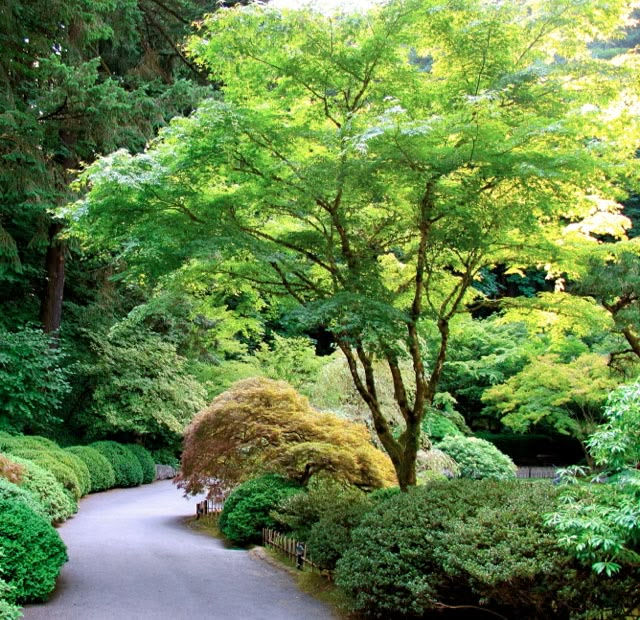
Creating a focal point in an all-green garden is crucial for capturing attention and enhancing visual interest. Consider incorporating a stunning plant, such as a Japanese Maple (Acer spp. & cvs), Cercidiphyllum japonica, or eye-catching topiary structures. These unique shapes or textures can stand out amidst the greenery. Alternatively, introduce garden art, like a stone sculpture or a decorative birdbath, to establish a focal point. Selecting materials that complement the green theme—such as natural stone or rustic wood—can add charm and tranquility to your shaded garden, maintaining a calm and relaxing atmosphere.
Layering for Depth
Layering plants effectively creates a lush and inviting atmosphere. By planting taller species at the back and gradually transitioning to shorter plants in the front, you can establish layers that add depth and volume. This technique not only boosts visual interest but also simplifies maintenance and access to sunlight.
Incorporate a mixture of evergreen and deciduous plants for year-round appeal. For instance, Evergreen plants will maintain their foliage in winter, ensuring that your all-green garden remains beautiful even when other plants are dormant.

Seasonal Considerations
When designing a shade garden, it's crucial to consider seasonal changes. Different plants have varied bloom times and growth habits, which can influence the garden's appearance throughout the year. Adding late spring bloomers like Brunnera or summer favorites like Hydrangeas can provide bursts of color while preserving the overall green aesthetic.
Moreover, incorporating plants that change color in the fall can provide an exciting contrast to your predominantly green landscape. For example, some shade-loving maples may display vibrant reds or golds by autumn, enriching your garden's charm.
Maintenance and Care
Maintaining a shade garden requires a careful approach that caters to its unique conditions. Ensure your soil is rich in organic matter to support diverse plant types. Using mulch can help retain moisture and suppress weeds, allowing your plants to thrive without competition. I am always encouraging a unique ground cover. In a shade garden Maianthemum dilatatum, Oxalis oregonum, Euronymous, Ajuga reptans are great shade loving groundcovers.
Regularly prune and divide perennials to keep them healthy and vigorous. Watch for pests and diseases, and provide adequate water without over-saturating the plants. This balanced care will enhance your all-green garden's beauty and longevity.
Final Reflections on Garden Creation
Designing an all-green shade garden invites you to explore nature's captivating beauty through thoughtful design and contrast. By highlighting varying shades, shapes, and textures, you can create an engaging and serene environment. The key lies in balancing different elements to guide the eye and establish focal points that enhance your garden’s tranquility.
Celebrate each plant's uniqueness while forming a cohesive green theme. Embrace the wonders of nature, and let your creativity flourish as you cultivate a rich, harmonious green refuge that brings peace and beauty throughout all seasons. Happy gardening!


Comments